Small mineral. Big impact.
Zinc is an essential trace mineral involved in hundreds of enzymatic reactions throughout the body. Although we only need small amounts, zinc plays a vital role in keeping us healthy.
Why is zinc so important?
Immune system support
Zinc supports normal immune cell development and function, helping your body respond to infections.
Healthy skin & wound healing
Zinc contributes to tissue repair, protein synthesis and maintaining healthy skin.
Hair health
Adequate zinc is important for healthy hair growth. Zinc deficiency can contribute to hair loss.
Growth & development
Zinc is essential for DNA synthesis, cell division and normal growth, particularly during pregnancy, childhood and adolescence.
Taste & appetite
Zinc plays a role in our sense of taste. Deficiency may affect taste perception and appetite.
Cellular health
Zinc is involved in hundreds of enzyme functions, supporting normal metabolism and cellular repair.
Are you getting enough zinc?
Possible signs of zinc deficiency include:
Hair thinning or hair loss
Slow wound healing
Changes in taste
Skin problems
Reduced appetite
Impaired immune function
These symptoms can have many causes and do not necessarily indicate zinc deficiency.
Where can we find zinc naturally?
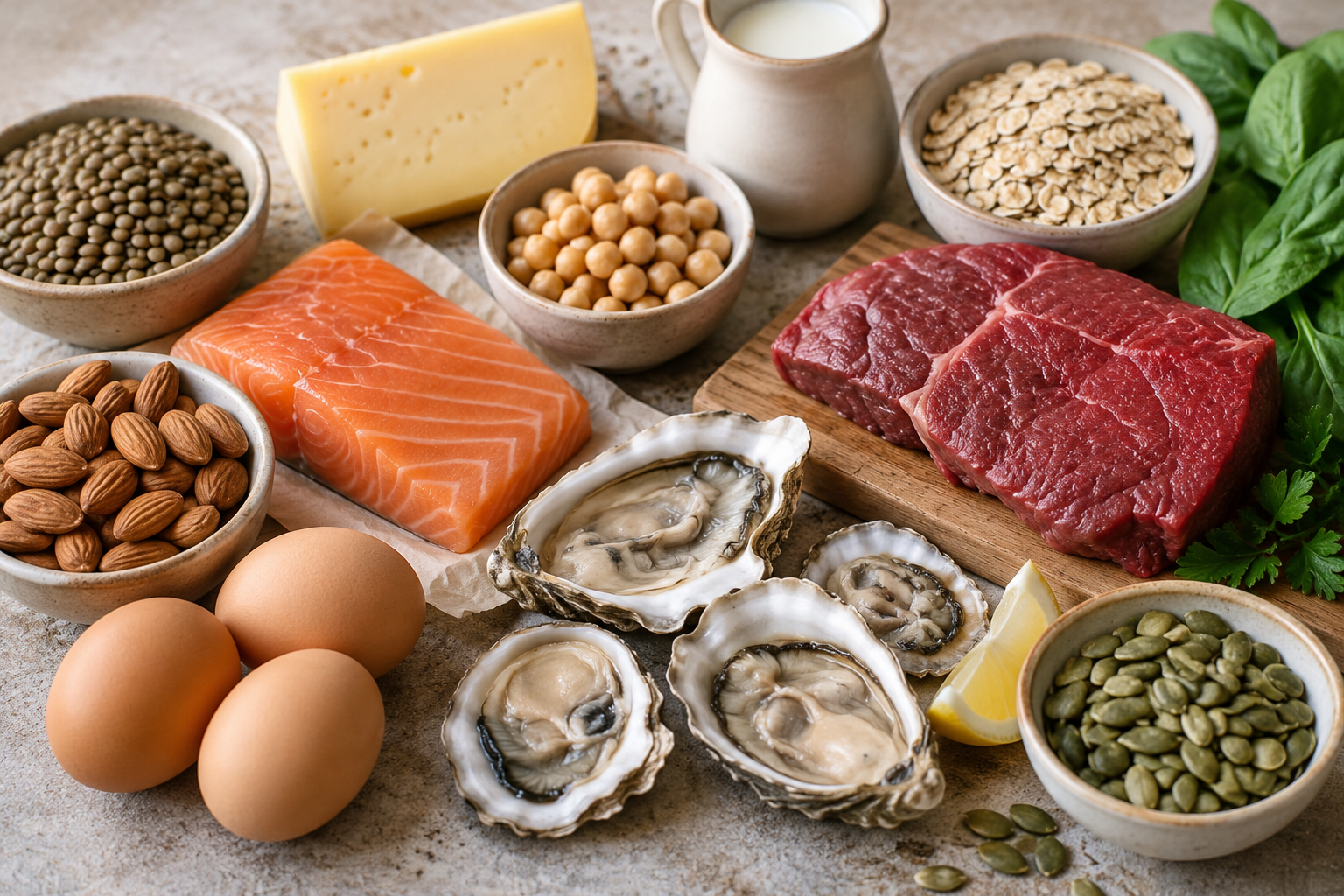
Zinc can be found in oysters, beef, pumpkin seeds, cooked oats, lentils, greek yoghurt, eggs.
Plant-based tip: Beans, nuts, seeds and whole grains contain zinc, but naturally occurring phytates can reduce its absorption. Soaking, sprouting and fermenting certain foods can help improve mineral availability.
How much zinc do we need?
For most healthy adults, the recommended daily intake is approximately:
Women: 8 mg
Men: 11 mg
Requirements may increase during pregnancy and breastfeeding.
Recommendations can vary by country.
Can too much zinc be harmful?
Yes. Taking high-dose zinc supplements for prolonged periods can interfere with copper absorption and may cause nausea, digestive discomfort and other problems.
Zinc supplements can also interact with certain medications, including some antibiotics.
Food first, supplements when appropriate. Zinc supplementation should be tailored to individual needs rather than taken routinely at high doses.
A naturopathic perspective
Good nutrition provides the foundation for healthy immune function, skin repair and overall wellbeing.
Erika Hoffmann
Clinical Herbalist & Naturopath
Educational information only. Not a substitute for individual medical advice.
